
The Anatomy of a $55 Million Loss: How Revenge Trading Destroyed a Portfolio
Discover how a $67 million memecoin portfolio collapsed by 80% due to emotional trading. Learn how to identify revenge trading and build a disciplined journal.

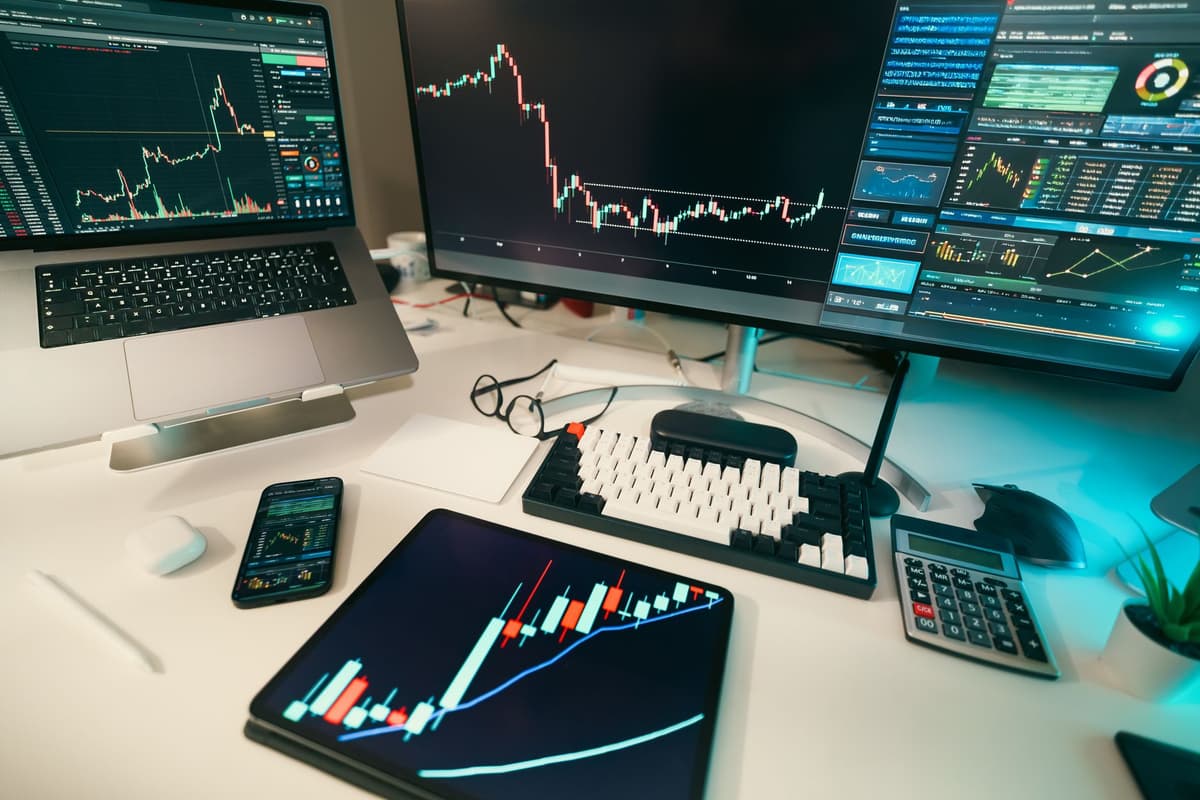
Revenge trading is the act of aggressively increasing position sizes or frequency following a loss to 'win back' capital, often leading to catastrophic account drawdowns. In the high-velocity Solana memecoin landscape of 2026, this behavior transformed a $67 million fortune into an $11.5 million balance in a matter of weeks, proving that emotional discipline is more critical than market intuition.
The Psychology of the Collapse
In 2026, the Solana ecosystem cemented its reputation as the global casino of the digital age. While the market shifted toward deeper community consensus and sophisticated AI-driven narratives, the fundamental risk remained human error. The collapse of a $67 million portfolio by over 80% serves as a sobering case study in what happens when a market participant stops trading the market and starts trading their own ego.
When a significant loss occurs, the brain often enters a 'fight or flight' state. In the context of memecoins, this manifests as the desperate need to reclaim lost value immediately. This is not strategy; it is a cognitive trap. The volatility of Solana—where daily token launches once reached nearly 100,000—provides the perfect environment for this cycle to spiral. Each 'revenge' trade is usually executed with less conviction and higher risk, leading to a compounding effect that can wipe out months of gains in days.
Why Memecoin Volatility Magnifies Emotional Failure
Unlike traditional markets, the memecoin sector functions on hyper-speed psychological game theory. When a participant suffers a drawdown, the pressure to 'make it back' is amplified by the constant flow of new narratives and the fear of missing out on the next cycle.
- The loss occurs, triggering a dopamine-seeking reaction to rectify the account balance.
- The participant ignores the original thesis, shifting from value-based entry to 'gambling' on high-risk, low-liquidity tokens.
- The market, sensing the desperation or simply moving through its natural volatility, punishes the increased sizing.
- The resulting loss confirms the spiral, leading to even more aggressive, irrational behavior.

Building a Defensive Journaling Habit
To survive the 2026 market, you must move beyond tracking simple PnL. A journal is not a record of success; it is a mirror for your behavioral flaws. If you cannot look at your trades objectively, you are susceptible to the same pitfalls that caused the $55 million reversal.
The Daily Reflection Template
When logging your activity, focus on the 'why' rather than the 'how much.' Use this structure for every entry:
- Date and Time: Capture the volatility environment.
- Thesis: What specific narrative or community signal drove this entry?
- Initial Risk: What was the predetermined exit if the narrative failed?
- Emotional State: Were you calm, or were you recovering from a previous loss?
- Outcome: Did you follow your exit rule, or did you panic?
- The Lesson: What did you learn about your process today?
FAQ
Is it possible to recover from an 80% drawdown through aggressive trading?
Mathematically, recovering from such a massive decline requires extreme performance that is rarely sustainable. Attempting to force this recovery through aggressive sizing almost always leads to total account depletion rather than a return to previous highs.
How can I tell if I am revenge trading?
If you find yourself opening a new position within minutes of a loss, increasing your average trade size without a change in market conditions, or feeling a sense of 'urgency' to fix your balance, you are likely revenge trading. The best indicator is a loss of focus on your initial thesis in favor of a singular desire to see the account number go back up.
Risk Awareness and Disclaimer
The memecoin market is highly speculative and subject to extreme volatility, including potential total loss of capital. The case study discussed here highlights the dangers of emotional decision-making in unregulated environments. This content is for educational purposes only and does not constitute financial advice, investment recommendations, or a guarantee of performance. Always conduct your own research and never trade with capital you cannot afford to lose completely.
Related posts in Memecoin Market Analysis
- Memecoin Market Analysis
Shiba Inu vs Dogecoin: Evaluating Meme Coin Market Sentiment in 2026
Analyzing the 2026 market dynamics for Shiba Inu and Dogecoin. Learn how to track emotional triggers and risk management in volatile meme coin environments.
Memelogs
- Memecoin Market Analysis
Dogecoin vs. Shiba Inu: A 2026 Perspective for Market Participants
Navigating the 2026 meme coin landscape requires more than just hype. Discover how to analyze Dogecoin and Shiba Inu through disciplined journaling habits.
Memelogs
- Memecoin Market Analysis
Bitcoin Hari Ini 2026: Market Stability and the Psychology of Low-Volume Trading
Bitcoin remains steady near $67,000 as market sentiment shifts. Discover how to process these market conditions through disciplined journaling and emotional…